Pencil Pattern: A Unique Approach to Full-Color Font Design
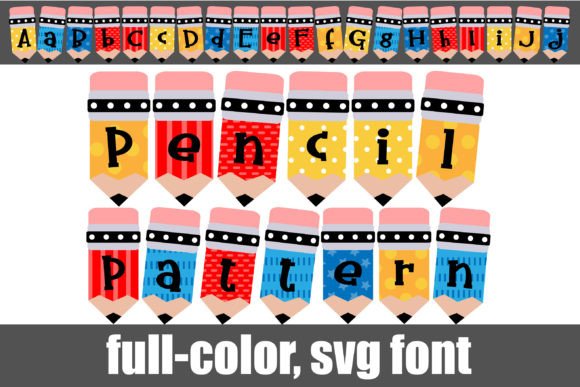
Pencil Pattern is a distinctive full-color font that combines the elegance of serif typography with the visual appeal of colorful, patterned pencils. This innovative design offers an alternative to traditional fonts by integrating vibrant colors and intricate patterns into each character. The font includes an alternate version of each letter in different colors, accessible through your system's character map, allowing for greater customization and creative expression.
Full-color SVG fonts like Pencil Pattern are installed similarly to standard .otf fonts, typically through FontBook on Mac systems or via font managers or the Control Panel on Windows. However, it’s important to note that color fonts may appear as black in non-compatible programs. Even within compatible software, they might initially show as black in the preview window. You can confirm if your program supports color fonts by typing text and observing whether the colors display correctly. Adobe products, Silhouette Studio, Quark, and Inkscape are among the applications that currently support full-color SVG fonts.
Why Consider Pencil Pattern?
Designers and creators looking for a unique way to add personality to their projects may find Pencil Pattern particularly appealing. Its blend of classic serif elements with bold, colorful patterns creates a visually striking effect that stands out from conventional typefaces. This makes it ideal for those seeking to make a statement with their typography, whether in branding, illustrations, or digital media.
The versatility of Pencil Pattern allows for a wide range of applications. From simple text logos to more complex illustrations, this font can be adapted to various design needs. Its vector-based nature ensures that it remains sharp and clear at any size, making it suitable for both print and digital formats.
Benefits of Using Pencil Pattern
- Versatility: Pencil Pattern can be used in multiple contexts, from web design to graphic art, offering flexibility in creative projects.
- Visual Appeal: The combination of serif style and colorful pencil patterns adds a unique aesthetic that can enhance the visual impact of any design.
- Scalability: As an SVG font, Pencil Pattern maintains quality at any size, ensuring crisp and clear output regardless of the scale used.
- Creative Customization: With alternate versions of each letter in different colors available through the system character map, users have greater control over how their text appears.
Considerations and Tradeoffs
While Pencil Pattern offers several advantages, there are also factors to consider before using it. One key consideration is compatibility with design software. Although many modern applications support full-color SVG fonts, some older or less common programs may not recognize them properly. In such cases, the font may appear in black or not render at all, limiting its usability.
Another factor is the learning curve associated with using color fonts. Unlike traditional fonts, which are straightforward to apply, color fonts may require additional steps to access their full range of features. Users must ensure they understand how to access alternate characters and manage color settings within their chosen software.
Additionally, while Pencil Pattern is well-suited for digital use, its effectiveness in print may depend on the printer's ability to reproduce color accurately. Designers should test the font in print before finalizing projects to avoid unexpected results.
Situations Where Pencil Pattern Fits Well
Pencil Pattern is a strong fit for designers who want to add a playful yet sophisticated touch to their work. It is particularly effective in projects that aim to capture attention through visual interest, such as children's books, educational materials, or promotional content targeting younger audiences. Its colorful nature also makes it suitable for branding efforts that emphasize creativity and innovation.
In digital environments, Pencil Pattern can enhance user interfaces, websites, and social media graphics by providing a dynamic and engaging visual experience. It works especially well when paired with other design elements that complement its style, such as hand-drawn illustrations or textured backgrounds.
When Alternatives May Be Better
Despite its unique qualities, there are situations where alternatives to Pencil Pattern may be more appropriate. For instance, in professional or formal contexts where simplicity and readability are prioritized, a more traditional serif or sans-serif font might be preferable. These fonts often provide better legibility, especially in smaller sizes or low-resolution displays.
Additionally, if a project requires strict adherence to brand guidelines or a specific visual identity, Pencil Pattern's bold and colorful nature may not align with the desired aesthetic. In such cases, a more subdued or neutral font could be a better choice.
For users working with software that does not support color fonts, alternative solutions such as using layered images or applying color manually may be necessary. While these methods can achieve similar effects, they may require more time and effort compared to using a built-in color font like Pencil Pattern.
Practical Decision-Making Insights
When evaluating whether Pencil Pattern is right for your project, consider the following questions: Does your design require a unique and eye-catching typographic element? Are you working in a software environment that supports full-color SVG fonts? Will the final output be viewed primarily in digital or print formats?
If the answer to these questions leans toward yes, then Pencil Pattern could be a valuable addition to your design toolkit. However, if your project demands high readability, consistency with existing brand standards, or compatibility with a wider range of software, you may want to explore other font options.
Ultimately, the decision to use Pencil Pattern should be based on a careful assessment of your project's goals, audience, and technical requirements. By weighing the benefits against potential limitations, you can determine whether this font will help you achieve the desired outcome or if another solution would be more effective.